|

Photo: A Fish Called Alaska Pollock | Genuine Alaska Pollock Producers /YouTube
Alaska Pollock Enters Final Stage of B-Season: Lower Fish Yield Strains Block and Surimi Markets
 UNITED STATES
Friday, October 23, 2026, 05:00 (GMT + 9)
The prevalence of smaller fish sharply reduces industrial processing output in the Bering Sea, driving global prices to record highs while the fleet reinforces strict controls on incidental catch.
SEATTLE / ANCHORAGE — The B-Season of Alaska pollock (Gadus chalcogrammus), the largest certified sustainable fishery in the United States, is heading toward its formal closing scheduled for November 1. The campaign concludes amid a complex operational scenario: while biological biomass remains abundant across the waters of the Bering Sea, average fish sizes are notably smaller than historical baselines. This biometric condition has led to steep declines in processing yields for surimi and PBO fillet blocks, putting strong upward pressure on wholesale benchmarks globally.

Smaller Catch Caliber and Contraction on Processing Lines
Technical reports released by primary processing companies, including American Seafoods, confirm that fishing operations have consistently encountered schools composed predominantly of smaller, younger fish. Sector analysts explain that this demographic transition was anticipated by biological forecast models: the prolific 2018 year-class has finished its main operational cycle within the commercial fishery, making way for an incoming generation that secures medium-term recruitment and biomass health.
Nevertheless, immediate operational impacts on floating at-sea processors and shore-based facilities are severe. The reduced fish size diminishes operating speeds and recovery yields along automated filleting lines. Consequently, cumulative production of Alaska pollock blocks during the B-Season has registered drops of up to 33%, pushing wholesale values at destination ports in Europe to record highs.
In the fish paste segment, the United States supply of surimi estimates an accumulated shortfall of nearly 50,000 metric tons, a volume deficit that exacerbates ongoing structural shortages observed across the international seafood market.
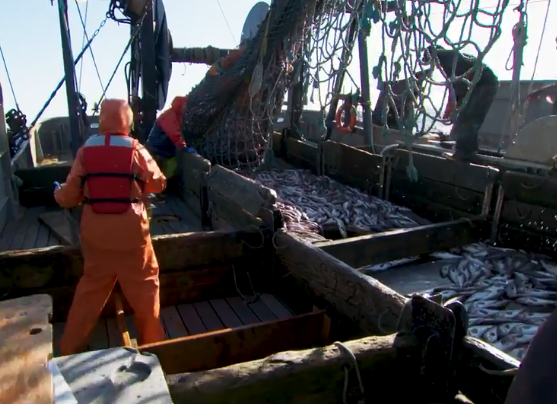
Source: NOAA
Market Dynamics and ASMI Institutional Metrics
According to market intelligence and sustainability reports published by the Alaska Seafood Marketing Institute (ASMI) — an organization tracking commercial competitiveness while biological monitoring and quota accounting remain under the oversight of NOAA and the NMFS — three core factors are shaping the sector during this seasonal close:
-
.png) Sustainability and Biological Governance: ASMI stresses that total allowable catch limits are set scientifically below available biomass thresholds to safeguard the marine ecosystem. Despite processing yield losses at plant level, the fishery maintains its international certifications for responsible management intact. Sustainability and Biological Governance: ASMI stresses that total allowable catch limits are set scientifically below available biomass thresholds to safeguard the marine ecosystem. Despite processing yield losses at plant level, the fishery maintains its international certifications for responsible management intact.
-
Surimi Positioning Campaigns: In response to supply volatility, ASMI intensified targeted promotional campaigns across high-consumption foreign markets. In Japan, a consumer-focused drive highlighting the origin, traceability, and quality of authentic Dutch Harbor surimi surpassed 1,000,000 impressions, protecting price premiums against lower-tier alternative products.
-
Domestic Consumption Trends: Market consumption tracking in the United States indicates continuous protein substitution toward seafood, spearheaded by the Millennial and Generation Z demographics. Fast-casual fish sandwich formats and convenient lunch items are driving food service demand, sustaining operating margins for domestic firms despite lower fillet yields per fish.
Strict Monitoring and Incidental Catch Thresholds
Beyond commercial factors, harvesting fleets operate under stringent regulatory standards to prevent incidental catch (bycatch). Following historical closures in the Gulf of Alaska triggered when strict hard-caps for Chinook salmon (Oncorhynchus tshawytscha) were reached, trawlers operating in the Bering Sea have taken rigorous precautionary measures throughout the 2026 season.
Bound by a strict limit of 45,000 salmon, the commercial fleet employs satellite electronic monitoring, onboard federal observers, and dynamic real-time closures. These tools allow vessels to bypass salmon migration corridors and guarantee that 100% of the allocated pollock quota can be safely harvested before severe winter weather sets in.
🇯🇵 日本語 (Japanese Version) | AIによる自動翻訳
アラスカ産スケトウダラ、Bシーズン最終盤へ:魚体の小型化と歩留まり低下がブロック肉・すり身市場を圧迫
ベーリング海で小型魚の混獲比率が高まり加工歩留まりが大幅低下、混獲規制を徹底するなか国際相場は過去最高水準へ急伸。
シアトル/アンカレッジ — 米国最大の持続可能認証漁業であるアラスカ産スケトウダラ(Gadus chalcogrammus)のBシーズンは、11月1日の公式閉幕に向けて最終段階に入りました。現在、ベーリング海域内では資源量そのものは豊富に確認されているものの、魚体サイズが平年を大きく下回るという操業上の課題に直面しています。この魚体小型化に伴い、冷凍すり身およびPBO(骨なし)フィレブロックの製造歩留まりが著しく悪化し、世界市場における卸売価格を急速に押し上げています。
漁獲魚体の小型化と加工ラインの生産能力低下
アメリカン・シーフーズをはじめとする大手水産加工各社の報告によると、操業船団は継続して若齢・小型魚主体の魚群と遭遇しています。業界のアナリストは、この状況は資源評価モデルですでに予測されていたと指摘しています。豊度が高かった2018年級群が漁獲対象の中心から徐々に移行し、将来的な資源水準を担保する新世代群へと切り替わっているためです。
しかしながら、母船式加工船や陸上加工施設への短期的影響は甚大です。小型魚の処理に伴い、自動フィレ加工ラインの機械稼働効率と可食部歩留まりは大幅に低下。その直接的影響として、今期のBシーズンにおけるスケトウダラ・ブロックの総生産量は前年同期比で最大33%の急減を記録し、欧州向け卸売価格は過去最高値を更新しています。
すり身製品においても、米国産すり身供給量は累計で約50,000トンの減産が見込まれており、国際的な水産物市場における原料不足を一層深刻化させています。
市場動向とASMI(アラスカシーフードマーケティング協会)の指標
水産資源の直接管理とモニタリングを担うNOAA(米国海洋大気庁)およびNMFS(米国海洋漁業局)と連携し、商業市場および持続可能性の動向を追跡するアラスカシーフードマーケティング協会(ASMI)は、シーズン終盤の重点要素として以下の3点を報告しています。
-
持続可能性と科学的管理体制: ASMIは、総許容量(TAC)が海洋生態系の保全を目的に生物学的許容漁獲量よりも低く設定されている点を強調しています。工場での加工歩留まりが低下しても、本漁業が取得する国際的な持続可能性認証の信頼性は強固に維持されています。
-
すり身プロモーションの推進: 供給の逼迫を受け、ASMIは消費地市場での販促活動を拡充。特に日本国内で実施されたダッチハーバー産本格すり身の品質と持続可能性を訴求するキャンペーンは1,000,000回以上の閲覧数を記録し、低品質な競合原料に対する差別化とプレミアム価値を確保しました。
-
米国国内需要の拡大: 米国市場における消費データは、ミレニアル世代およびZ世代を中心とした水産物へのタンパク質移行を示しています。外食産業では白身魚サンドイッチや簡便調理品が好調に推移しており、魚1尾あたりのフィレ歩留まり低下を補う形で事業者の収益性を支えています。
混獲上限の厳格監視とコンプライアンス遵守
市場要因に加え、漁獲船団は厳しい環境規制基準のもとで操業を継続しています。過去にアラスカ湾においてキングサーモン(マスノスケ、Oncorhynchus tshawytscha)の混獲上限超過に伴う早期操業停止が発生した事例を受け、ベーリング海のトロール船団は2026年の最終盤において細心の回避措置を講じています。
許容混獲上限が45,000尾に厳格設定されるなか、船団は衛星電子モニタリング、オブザーバーの乗船、リアルタイムの海域閉鎖システムをフル稼働させています。これらによってサーモンの回遊ルートを回避しながら、冬季の本格的荒天が訪れる前に配分されたスケトウダラ漁獲枠の100%枠消化を安全に達成する体制が確立されています。
🇨🇳 中文 (Simplified Chinese Version) | 由人工智能自动翻译
阿拉斯加狭鳕B渔季进入收官阶段:鱼体出肉率偏低加剧加工块与鱼糜市场供应紧张
白令海幼鱼比例增加致使工业出成率急剧下滑,国际大宗价格创历史新高,捕捞船队全面升级兼捕管控力度。
西雅图 / 安克雷奇 — 作为美国规模最大的可持续认证渔业,阿拉斯加狭鳕(Gadus chalcogrammus)B渔季正向11月1日的法定停捕节点平稳推进。本季渔业在复杂的生产环境下走向尾声:尽管白令海海域的生物资源蕴藏总量维持充沛,但捕获个体的平均规格明显偏小。这一生物特征导致狭鳕鱼糜以及PBO(无刺去皮)鱼柳块的加工出成率大幅受挫,并推动国际主要批发市场的行情强劲走高。
捕捞规格偏小与加工流水线产能承压
包括美国海产(American Seafoods)在内的主要初级加工企业报告指出,作业船队在捕捞作业中持续遇到以幼龄和较小规格为主的鱼群。水产行业分析人员指出,这一鱼龄结构转换在海洋生物资源预测模型中已有预期:2018年高丰度世代鱼群在商业捕捞中的生命周期已基本完成,正在向保障中长期资源储备的新生代群体更替。
然而,这对海上冷冻加工船和陆上加工工厂带来了立竿见影的产能冲击。较小的鱼体显著降低了自动化切片流水线的机械处理效率与原料出肉率。受此直接制约,B渔季狭鳕鱼块的总产量录得高达33%的萎缩,推动面向欧洲目的港的批发到岸价突破历史峰值。
在鱼糜加工领域,美国本土鱼糜原料供应量预计累计减少近50,000公吨,进一步放大了国际水产原料市场的结构性供需缺口。
市场动态与阿拉斯加海产市场协会(ASMI)核心指标
阿拉斯加海产市场协会(ASMI)作为监测行业竞争力与可持续性的专门机构(生物监测与捕捞额度核算则由美国国家海洋和大气管理局NOAA及国家海洋渔业局NMFS执行),其最新报告披露了当前行业运行的三大关键驱动力:
-
可持续监管与科学配额机制: ASMI指出,全季捕捞配额均基于科学评估设定在总生物量阈值以下,旨在巩固海洋生态韧性。尽管加工端遭遇出肉率波动,该渔业的国际可持续渔业认证标准仍得到完整维持。
-
鱼糜全球推广策略: 针对供应波动局势,ASMI加大了核心消费市场的定向宣发。在日本,围绕荷兰港(Dutch Harbor)高品质源产地正宗鱼糜展开的推广活动累计曝光量已突破1,000,000次,有效巩固了美国优质原料在抵御低端替代品时的溢价空间。
-
美国本土消费结构转型: 美国消费跟踪数据显示,以千禧一代和Z世代为代表的年轻客群正在加速将传统红肉消费向水产品倾斜。在餐饮渠道中,狭鳕鱼排堡和即食便携午餐产品展现出强劲销售拉力,有效对冲了单鱼出肉率下滑对加工企业带来的利润压力。
兼捕红线管控与全流程合规保障
除了商业与加工端的平衡,捕捞船队还在极其严格的法规标准下作业,严格控制兼捕(bycatch)。鉴于此前阿拉斯加湾海域曾因达到奇努克鲑鱼(Oncorhynchus tshawytscha)兼捕刚性红线而被迫提前关闭捕捞的历史前例,白令海拖网船队在2026年渔季尾声全面收紧了防范措施。
在严控45,000尾鲑鱼兼捕上限的前提下,商业船队全面启用卫星电子监控、随机观察员制度以及动态实时海域关停机制。这些举措确保船队有效避开鲑鱼洄游走廊,确保在严冬海况封冻前安全完成100%狭鳕法定捕捞配额。
editorial@seafood.media
www.seafood.media
|





 Print
Print